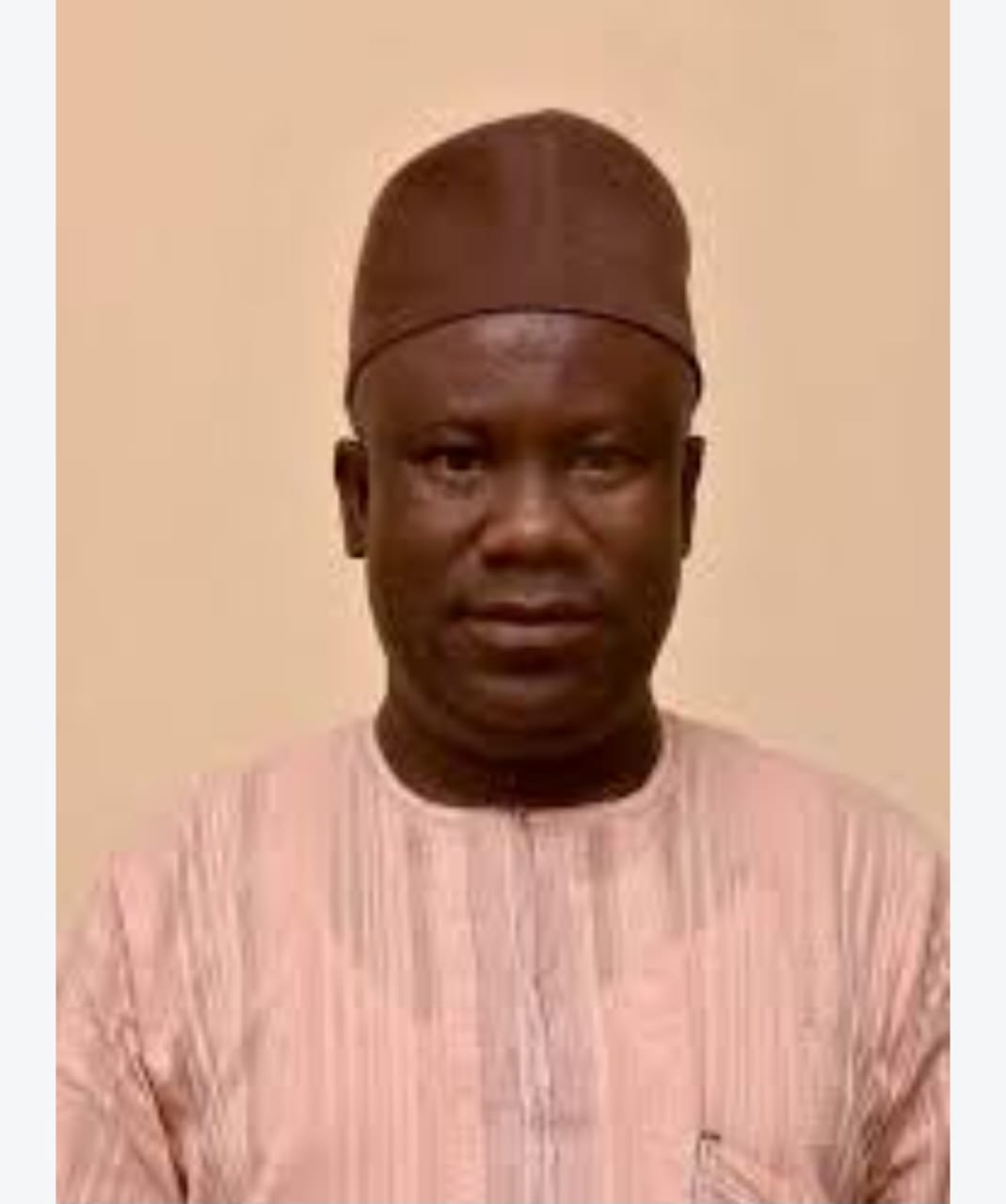
By Abdulrazak Usman Ph.D
The temptation to assume that a piece written by Abba Anwar, titled “Reassessment of DSP Barau’s Projects in Kano North: One Building, Three Names,” was motivated by patriotic zeal and a genuine desire to speak for his community is understandable. However, the events of October 18, 2026, provide a compelling reason to question that assumption.
Until recently, Anwar was among the ardent admirers of the Deputy President of the Senate, Distinguished Senator Jibrin Barau. He consistently praised the DSP’s political astuteness, resilience, and remarkable infrastructural interventions across his senatorial district.
In the July 3, 2025, edition of Daily Trust, Anwar published an article titled “How Barau, Doguwa Rose Amid Political Persecution,” in which he commended the DSP for surviving numerous political challenges and going on to achieve remarkable feats beyond those of many of his contemporaries.
A few months later, in another article published by Daily Trust on November 15, 2025, titled “The Debut of DSP Barau and Natural Occurrences,” Anwar again offered glowing commendation of the DSP’s leadership, drawing extensively from the findings of a research study conducted by experts.
Among the many observations he made was one that now raises a fundamental question: How does someone who so enthusiastically endorsed a political leader’s achievements suddenly turn around, within less than a year, to disparage the same individual?
Anwar wrote:
“Senator Barau’s interventions across the spectrum are well acknowledged and appreciated by the study. Ranging from his constituency projects, genuine and meaningful empowerment and other interventions since he was a Member of the House of Representatives from Tarauni federal constituency, up to the feats he achieved as a Senator.
They include his scholarship programmes in local and foreign universities. Commending the choice of courses of study and schools selected.
Like in the Nigerian universities, students were sent to study degree programmes in some of our premier universities, like Ahmadu Bello University, Zaria, University of Ibadan, Obafemi Awolowo University, Ile-Ife, Bayero University, Kano, University of Lagos, alongside other universities.”
For someone who, by conviction, went to such lengths to endorse the findings of experts and extol the virtues of a political leader, only to turn around months later to ridicule that same leader, something is clearly amiss.
And one does not have to look far to understand what may have changed.
The October 18 Turning Point
On October 18, 2026, Anwar published a rejoinder to a Weekend Trust report concerning a deep-pocketed member of the House of Representatives from Kano.
In the process of defending the lawmaker, he took the opportunity to disparage serving legislators from Kano State through innuendos that now appear to provide context for his latest attack on the Deputy President of the Senate.
In that rejoinder, published more than a week before his current article, Anwar offered a revealing glimpse into his emerging political alignments. He criticised certain legislators from Kano for allegedly failing to complete their projects, although he conspicuously refrained from mentioning their names.
He wrote:
“One encouraging aspect of the photographs (used by Weekend Trust) is that they show completed projects. This stands in contrast to the situation involving some prominent legislators who frequently boast about their projects but whose projects, unfortunately, remain incomplete or are executed to only a negligible extent.
“Even more troubling is the practice of presenting existing structures as newly executed projects, sometimes for the purpose of claiming credit for work that was already completed.”
These statements suggest that Anwar had already embarked on a campaign to undermine certain members of the National Assembly from Kano, a development that became more apparent with his subsequent attack on the Deputy President of the Senate.
While Senator Barau has weathered numerous political storms, as Anwar himself previously acknowledged, there is a compelling need to set the record straight. This is necessary to correct the distortions in the article and prevent unsuspecting members of the public from accepting claims that misrepresent the facts.
ON THE KANO–GWARZO–DAYI ROAD
It is important to clarify that the N56 billion earmarked for the Kano–Gwarzo–Dayi Road has been provided for in the budget, although the funds have yet to be released. This, rather than the malicious insinuations being peddled, remains one of the major impediments to the pace of work on the project.
It will be recalled that the Deputy President of the Senate, Senator Barau I. Jibrin, recently met with President Bola Ahmed Tinubu to express concern over the slow pace of work and appeal for a change of contractor to ensure the timely completion of the project.
What a merchant such as Anwar know, but is unwilling to acknowledge because of their mercantile proclivities, is that projects of this magnitude require substantial funding and considerable time to complete.
The Abuja–Kaduna–Kano Road, for instance, has been under construction for about a decade, while several other projects across the country have remained incomplete since 1999 due to paucity of funds.
Despite these challenges, Senator Barau continues to work tirelessly to ensure that the Kano–Gwarzo–Dayi Road is completed as soon as possible.
Facilitating a major infrastructure project that benefits multiple communities is a significant achievement for any senator.
ON THE IMMIGRATION TRAINING SCHOOL, BICHI, AND NSCDC TRAINING SCHOOL, GWARZO
Even a cursory understanding of legislative functions reveals that facilitating the establishment of a federal institution is fundamentally different from executing its construction. Works at the schools are ongoing.
ON THE FEDERAL UNIVERSITY OF SCIENCE AND TECHNOLOGY, KABO
During the last Senate, Senator Barau sponsored a bill to establish the Federal Polytechnic, Kabo. The bill was passed by the National Assembly and assented to by the then President. Two sets of graduates have since passed through the institution.
In the current Senate, he sponsored another bill to upgrade the Polytechnic to a full-fledged university. Following its passage by the National Assembly, President Bola Ahmed Tinubu graciously assented to the bill, paving the way for the establishment of the Federal University of Science and Technology, Kabo.
For the 2026/2027 academic session, the university has shortlisted students for admission, and the processes are still ongoing, contrary to the false claims being circulated by Anwar in what appears to be an attempt to appease his paymaster.
Since 1999, no other lawmaker in Kano State has facilitated the establishment of a federal university through the legislative process. This is a record that deserves recognition, not distortion.
*A WORD OF CAUTION TO ANWAR
At this juncture, one is compelled to advise Anwar to desist from the path popularly described in Nigeria as the “anywhere belle face” syndrome.
With each passing day, his writings increasingly expose what appear to be serious deficiencies in intellectual rigour, credibility, and an unrestrained appetite for financial inducement.
This explains why his articles are often characterised by contradictions, ad hominem attacks, and disjointed conjectures rather than coherent arguments grounded in verifiable facts.
An example beyond the present controversy is his article titled “Kebbi: The Performing State Nobody Sees,” which attracted a response from Ibrahim A. Jombali, Special Adviser on Public Enlightenment and Orientation to the Governor of Kebbi State. Jombali’s rejoinder, titled “Kebbi Is Not Invisible: A Rejoinder to Abba Anwar’s Media Visibility Theorem,” pointed out the contradictions in Anwar’s argument.
One understands that the times are difficult. However, making a living by accepting assignments to malign individuals and political leaders is a despicable practice that undermines the integrity of public discourse.
Anwar would do well to reflect on this counsel and reconsider the path he has chosen. At the very least, he should endeavour to preserve whatever remains of his credibility.
Patriotism is not a convenient cloak for political opportunism, just as criticism should never be reduced to a transactional exercise.
The public deserves honest, consistent, and fact-based commentary—not a spectacle of political turncoatism masquerading as patriotism.
Abdulrazak Usman Ph.D, wrote from Kano.