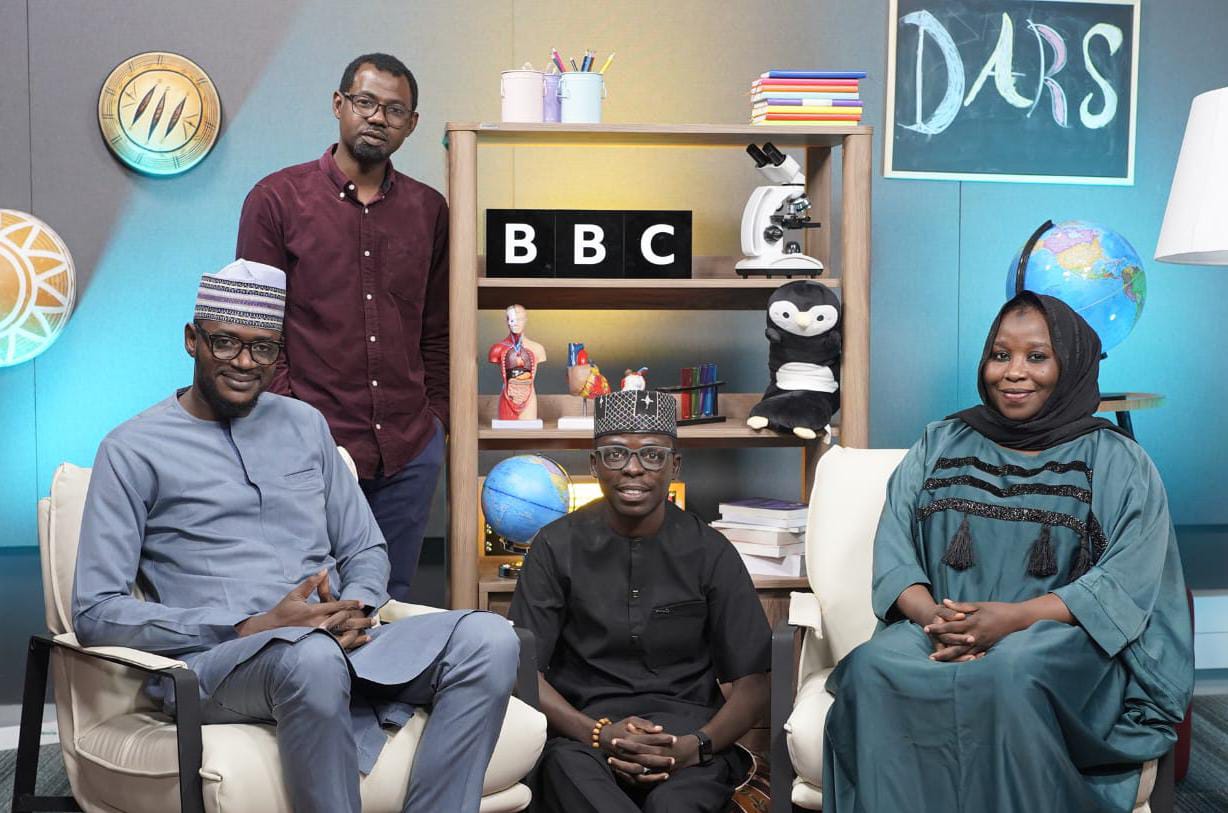
The BBC World Service is set to launch the Hausa edition of its award-winning educational programme, Dars, aimed at providing learning opportunities for children aged 11 to 16 across West Africa.
The Independent Mirror reports that the programme, known as Dars Hausa, will feature television, radio and digital lessons in English, Mathematics and Science, alongside content on mental health and inspirational stories.
According to the BBC, the first series will premiere on November 17 and comprise 12 episodes.
Dars Hausa will air on BBC News Hausa every Sunday at 05:30 GMT, with a repeat broadcast at 19:30 GMT. The programme will also be available on the BBC News Hausa social media platforms, including YouTube, Facebook, X, Instagram and TikTok.
Full-length episodes will be accessible through the Courses section of the BBC News Hausa YouTube channel, while audiences can listen to the programme on medium wave and through partner FM radio stations.
Read also:
BBC Appoints Kakangi as New Editor of Hausa Service
The launch comes amid growing concerns over the high number of out-of-school children in Nigeria, particularly in the northern region, where insecurity, displacement and armed group activities have disrupted access to education.
The United Nations estimates that nearly 19 million children in Nigeria are out of school, placing the country among those with the highest numbers of children without access to formal education.
Years of conflict and insecurity in northern Nigeria have forced millions of people to flee their homes, leaving many children with interrupted or discontinued education.
Displaced children, in particular, continue to face significant barriers to accessing regular schooling, highlighting the need for alternative learning opportunities.
The BBC said Dars Hausa was developed to help address some of these challenges by giving Hausa-speaking children access to educational content drawn from its teaching resources.
Fiona Crack, Director of the BBC World Service, said education was a fundamental right, but many children affected by conflict and displacement remained unable to attend school.
Through the programme, the BBC aims to expand access to educational resources and provide children with additional opportunities to continue learning despite the challenges they face.