The Politics of Performance and the Promise of 2027
By Hon. Muhammad Sanusi Majidadi Kiru, FCIA
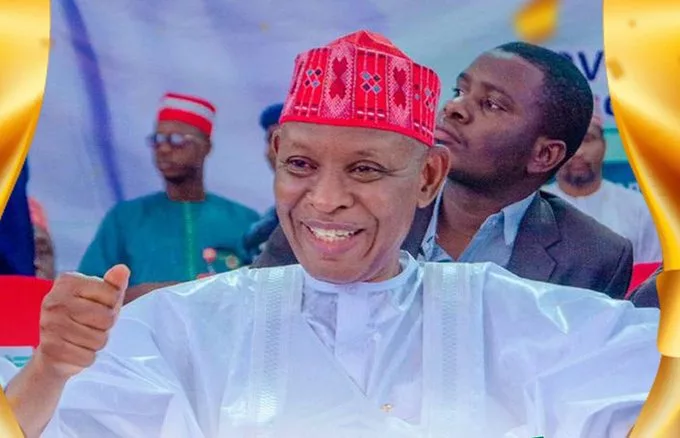
There comes a defining moment in the political journey of every society when the conversation must move beyond political affiliations, partisan rivalries and electoral calculations to a more fundamental question: what has leadership actually delivered, and what does that delivery mean for the future of the people? In Kano State, that question provides an important framework for understanding the administration of Governor Abba Kabir Yusuf, its development priorities, its evolving political relationships and the growing conversation about the state’s future ahead of the 2027 general elections.
Kano is not an ordinary political environment. It is a state with an extraordinary population, a rich history of political consciousness, a vibrant commercial economy and an electorate that has consistently demonstrated its capacity to influence the direction of national politics.
Its people are politically sophisticated, socially engaged and accustomed to evaluating leadership through both performance and public expectations.
Winning their confidence requires more than political popularity. It demands purposeful administration, visible commitment, responsiveness to citizens and the ability to translate promises into tangible outcomes.
It is against this background that Governor Abba Kabir Yusuf’s administration deserves a comprehensive assessment. Since assuming office in May 2023, the Governor has pursued an agenda covering education, healthcare, infrastructure, human-capital development, employment, social welfare, institutional reforms and security.
These are not isolated policy areas; together, they constitute the essential foundations upon which a modern, productive and socially inclusive Kano can be built.
Perhaps nowhere is this commitment more evident than in education. Kano’s future is inseparable from the quality of education available to its children and young people.
An administration that invests in education is not merely constructing classrooms or employing teachers; it is investing in the intellectual capacity, economic productivity and long-term competitiveness of an entire generation.
The revival and implementation of the 1,001 postgraduate foreign scholarship programme stands out as one of the administration’s most significant human-capital interventions.
The initiative has provided opportunities for deserving Kano indigenes to pursue advanced studies in specialised disciplines at international institutions.
Its importance extends beyond the immediate beneficiaries. It represents an investment in knowledge, professional expertise and the development of a skilled workforce capable of addressing the state’s long-term manpower requirements.
The return of foreign-trained graduates has also created an opportunity to connect educational investment with practical public-sector development.
In March 2025, Governor Yusuf announced arrangements to offer automatic employment in the health sector to 54 returning postgraduate scholars who had specialised in medical and pharmaceutical disciplines in India.
In April 2026, another 110 foreign-trained postgraduate scholars received their academic certificates, with the government indicating its intention to recruit qualified graduates into critical sectors facing manpower shortages.
This is the kind of connection between education and governance that deserves encouragement: public resources invested in developing people, followed by deliberate efforts to deploy their acquired expertise for the benefit of society.
Beyond postgraduate scholarships, the administration’s wider educational interventions, including school development, teacher recruitment, institutional support and capacity building, deserve recognition as part of a broader effort to strengthen the state’s educational foundation.
The real measure of success, however, will be the extent to which these initiatives translate into improved learning outcomes, better educational access and a more competitive generation of young people.
Healthcare is another defining dimension of responsible governance. For ordinary families, access to quality medical services is not a political luxury; it is a fundamental necessity.
The strengthening of primary healthcare, improvement of medical facilities, investment in specialised manpower and attention to the welfare of healthcare professionals are essential to improving public health outcomes.
The administration’s decision to integrate returning foreign-trained medical and pharmaceutical graduates into the health workforce is particularly noteworthy.
Kano needs qualified professionals who understand modern medical practice and can apply their expertise to the health challenges confronting its population.
This investment in specialised human resources, when properly deployed and supported by functional facilities, can contribute meaningfully to improved healthcare delivery.
Infrastructure development equally provides an important basis for assessing the administration’s performance. Roads, bridges, flyovers, water supply facilities and other public infrastructure are not simply physical structures.
They are instruments of economic activity, mobility, social integration and improved living conditions.
For a commercial centre as important as Kano, functional infrastructure has implications far beyond urban aesthetics. It affects the movement of goods, the cost of doing business, access to markets, the development of residential communities and the overall productivity of the economy.
Investments in road connectivity, transport infrastructure, water resources and public facilities should therefore be understood as part of a wider economic-development strategy.
The administration’s attention to neighbourhood security and community-level interventions also deserves consideration.
Security is a shared responsibility requiring effective collaboration among conventional security agencies, government institutions and local communities. Initiatives that strengthen neighbourhood vigilance, improve local intelligence and bring security closer to citizens can complement the work of established security institutions.
Their effectiveness must, of course, be measured by sustained improvements in safety and the protection of lives and property.
Equally important are the administration’s interventions in employment, women’s empowerment and social welfare.
Government performance should never be assessed exclusively through the number of capital projects commissioned or the financial value of infrastructure contracts awarded.
It must also be judged by the extent to which public policies improve the circumstances of ordinary citizens.
Opportunities for women, support for vulnerable households, employment initiatives, improved conditions of service and attention to outstanding obligations owed to eligible public officeholders all contribute to the broader social contract between government and the people.
One particularly important area is the settlement of outstanding local-government political officeholders’ entitlements.
The government publicly announced a ₦15.6 billion approval in April 2025 for outstanding severance benefits and allowances owed to former councillors who served between 2014 and 2024.
The wider settlement of eligible local-government political officeholders’ outstanding obligations also represents an important aspect of the administration’s commitment to addressing inherited liabilities and recognising the contributions of those who served at the grassroots.
Such interventions carry significance beyond the financial transactions involved. They speak to institutional responsibility, respect for public service and the importance of ensuring that legitimate obligations are not abandoned simply because political administrations change.
Indeed, the administration’s performance can now be examined through an increasingly important framework of policy monitoring and accountability.
The Strategic Governance and Policy Coordination Directorate, established within the Office of the Governor, publishes a performance tracker covering 232 government promises across 16 priority sectors.
Its published figures report 161 completed promises, 38 ongoing and 33 in the planning phase, representing a weighted completion rate of approximately 81.1 per cent.
While such government-generated figures should remain open to independent scrutiny and public verification, the establishment of a performance-tracking framework is a welcome institutional development.
Governance should be measured through evidence, implementation and results, not merely through announcements. The more effectively the government institutionalises monitoring, evaluation and public accountability, the stronger the credibility of its development claims will become.
Taken together, these interventions provide a basis for a broader argument: governance is most meaningful when its benefits are experienced across different segments of society.
The true value of leadership is not confined to the visibility of projects or the volume of official announcements.
It is reflected in opportunities created, institutions strengthened, obligations fulfilled and the quality of life improved.
This brings us to an important political reality. In a politically conscious state like Kano, development and electoral confidence are not entirely separate conversations.
Citizens observe, assess, compare and form opinions about the performance of those entrusted with public responsibility. Where people see meaningful improvements, public confidence has an opportunity to grow.
Where expectations remain unmet, criticism is inevitable. This is the democratic process, and no administration should consider itself above public scrutiny.
It is in this context that the metaphor of a voters’ farm becomes particularly relevant. Political support, like a harvest, does not emerge from nowhere.
It is cultivated through relationships, sustained engagement, public trust and the practical consequences of leadership.
A government that invests in education, healthcare, infrastructure, employment and social welfare is cultivating the conditions upon which public confidence can grow.
But the harvest is never automatic. Citizens must be listened to, communities must feel included, and government must remain responsive to emerging concerns.
Political confidence is sustained not by assuming that achievements alone guarantee electoral loyalty, but by recognising that every achievement creates an additional responsibility to do more.
Beyond governance, Governor Yusuf’s political transition into the All Progressives Congress has introduced another significant dimension to Kano’s political calculations.
The movement has altered established political relationships and opened a new chapter in the state’s political organisation.
It has also created an opportunity to bring together political tendencies that previously operated within different platforms.
The significance of this development should not be underestimated. Political realignment is rarely just a change of party platform. It involves the reorganisation of interests, the reconciliation of competing tendencies and the construction of a broader political coalition.
The integration of former Kwankwasiyya members and other political stakeholders into the APC presents an opportunity to transform previous divisions into a more inclusive political structure.
However, the success of this transition will depend on the quality of political management.
Bringing different tendencies together requires patience, fairness, mutual respect and a willingness to accommodate legitimate interests.
Political integration cannot be achieved merely through declarations of allegiance. It must be demonstrated through participation, consultation, recognition and a genuine sense of belonging.
This is where consensus-building becomes indispensable. Kano’s political strength has historically been associated with the influence of its major political personalities, institutions and grassroots structures.
A sustainable political arrangement must therefore provide room for stakeholders to contribute while maintaining a clear and coordinated leadership direction. Aq
Unity should not mean the suppression of legitimate differences; rather, it should mean the ability to manage those differences in pursuit of a common objective.
The APC stakeholders’ endorsement and adoption of Governor Yusuf as their consensus choice for the 2027 governorship election in May 2026 represented a significant political development.
It demonstrated an early effort by party leaders to consolidate support around his leadership and reduce uncertainty over the party’s direction in Kano.
Yet, the more important question is what the political coalition will do with the opportunity before it. A consensus arrangement is only as strong as the fairness, inclusiveness and discipline with which it is managed. It must create room for experienced stakeholders, emerging political actors, grassroots structures, women, young people and previously disconnected interests to participate meaningfully.
The 2027 political journey must consequently be approached with strategic maturity.
Governor Yusuf has an opportunity to place his administration’s development record at the centre of political engagement, while the APC has an opportunity to consolidate its growing structure through reconciliation, effective stakeholder management and grassroots mobilisation.
It is also important to distinguish between political predictions and the actual voice of the electorate. Individuals are entitled to their political opinions, including predictions about electoral outcomes.
But no individual’s prophecy, however confidently expressed, should be mistaken for the collective verdict of Kano’s people. Elections are determined by citizens exercising their democratic choices, not by the certainty with which political commentators announce victories or defeats.
The appropriate response to political criticism is therefore not hostility, but evidence, engagement and superior argument.
Supporters of Governor Yusuf should be prepared to defend his administration through verifiable achievements, acknowledge areas requiring improvement and explain the broader direction of government policies.
A credible political movement does not fear scrutiny; it uses scrutiny to strengthen its arguments and improve its performance.
Ultimately, the greatest opportunity before Governor Abba Kabir Yusuf is to transform his administration’s achievements into a lasting development legacy.
Roads and buildings are important, but institutions, educated citizens, a stronger healthcare system, productive young people, empowered women and a responsive public service are equally important measures of historical significance.
Kano needs continuity where continuity produces progress, innovation where new challenges demand fresh thinking and political unity where collective action can advance the common good.
The Governor’s responsibility is to ensure that the momentum generated by his administration is sustained, deepened and translated into measurable improvements across all 44 local government areas.
The road to 2027 will undoubtedly attract political competition, competing narratives and attempts by different interests to shape public opinion.
That is neither unusual nor unhealthy in a democracy. What should distinguish the Governor’s political engagement is the ability to place governance above political theatrics, performance above propaganda and the interests of Kano’s people above narrow partisan calculations.
The ultimate test of leadership is not simply how successfully a politician navigates an election, but what remains after the election has been won.
It is the quality of institutions left behind, the opportunities created for future generations, the dignity restored to citizens and the development foundations established for those who will inherit the state.
Governor Abba Kabir Yusuf has an opportunity to make that enduring contribution. His administration has recorded achievements that deserve public examination, his political transition has opened a new chapter in Kano’s political relationships, and the emerging coalition around his leadership presents an opportunity for broader political reconciliation.
The challenge now is to consolidate these gains, address the unfinished business of governance and ensure that every community sees itself as part of Kano’s development journey.
The 2027 question, therefore, should not be reduced to who is making the loudest political prediction. It should be about who has demonstrated the capacity to lead, who has invested in the people, who has strengthened public institutions and who offers a credible pathway to the future.
For Kano, the most enduring political harvest will be one measured not merely by ballots cast, but by lives improved, opportunities created and a legacy of development that future generations can proudly inherit.