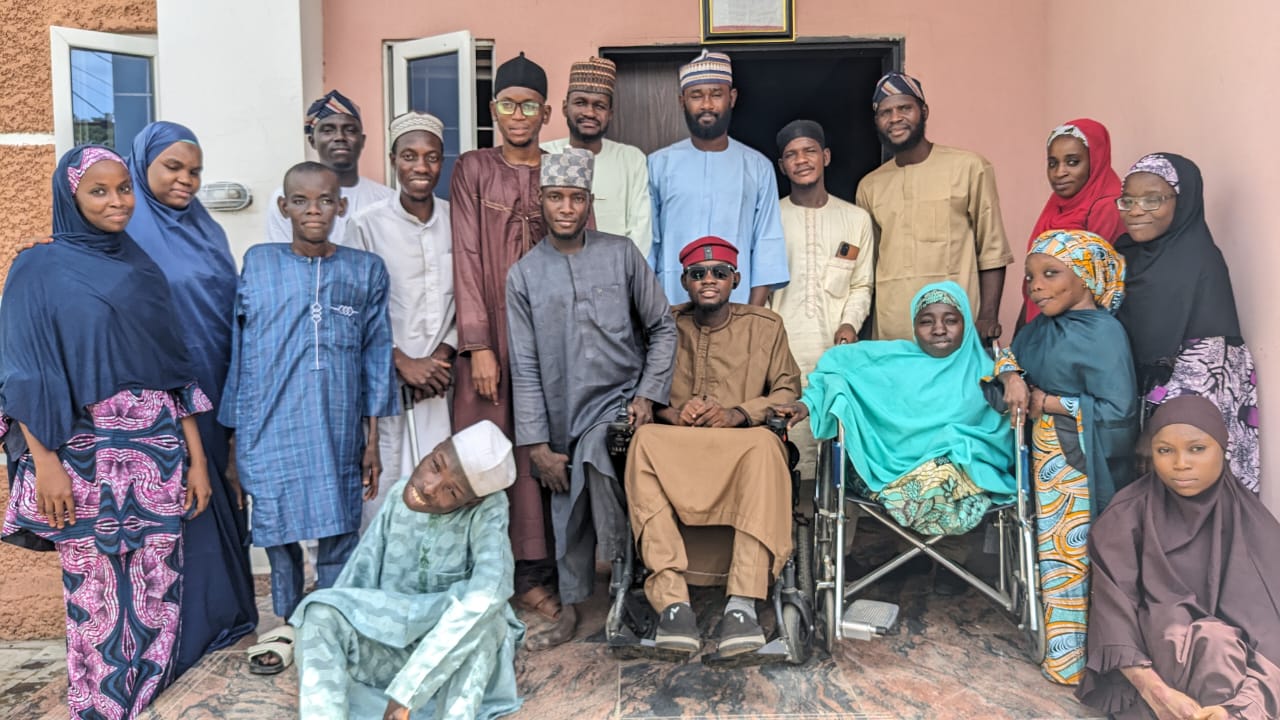
The Centre for Information Technology and Development (CITAD) has raised concerns over the exclusion of persons with disabilities from government digital services, calling for urgent action to make public websites and online platforms accessible to all Nigerians.
The Independent Mirror reports that CITAD made the call after training persons with disabilities on digital rights, data protection and online safety in Kano.
The three-day training, which concluded on Saturday, was organised under the Centre’s Campaign for Improved Accessibility of Government Websites and Portals (CIAGOP), with support from the Association for Progressive Communications (APC).
The programme brought together participants from six clusters of persons with disabilities and was conducted in three batches.
Participants were drawn from the albinism, hearing impairment, dwarfism, spinal cord injury and visual impairment clusters.
Speaking at the opening ceremony, CITAD’s Executive Director, Yunusa Zakari Ya’u, represented by Ali Sabo, said persons with disabilities must not be excluded from Nigeria’s rapidly expanding digital environment.
Sabo said the training was designed to equip participants with the knowledge and skills to protect themselves online, understand their digital rights and safely navigate digital platforms.
“Digital inclusion must go beyond providing access to technology. It must also ensure that people can use digital platforms safely, securely and without discrimination,” he said.
Also speaking, CITAD’s Coordinator for Persons with Disabilities, Hamza Aminu Fagge, said the CIAGOP project was established to address the barriers preventing persons with disabilities from accessing government websites and online services.
Fagge said the campaign would generate evidence on accessibility gaps in government websites and engage relevant stakeholders to ensure that digital platforms comply with recognised accessibility standards.
“Accessibility is not a favour to persons with disabilities; it is a right. Government digital platforms must be designed to enable every citizen, regardless of disability, to access essential services independently and with dignity,” he said.
He noted that inaccessible government websites could further widen the digital divide and deny persons with disabilities equal access to essential public services.
Fagge added that the campaign advocates for more accessible government digital platforms to promote the inclusion of persons with disabilities in Nigeria’s digital governance.
The training featured sessions on data protection and privacy, emerging technologies, internet safety and security, as well as cyberbullying and online harassment.
Ali Sabo facilitated the session on data protection and privacy, while Yusuf Babagana delivered a presentation on emerging technologies.
Suhail Sani facilitated the session on internet safety and security, where participants learned about online risks and practical measures for protecting their accounts, devices and personal information.
Amina Khalid led the final technical session on cyberbullying and online harassment, focusing on the impact of online abuse on persons with disabilities and practical strategies for staying safe online.
The CIAGOP campaign targets improved accessibility of key government digital platforms, including those of the Joint Admissions and Matriculation Board (JAMB), the National Identity Management Commission (NIMC), the National Examinations Council (NECO), the West African Examinations Council (WAEC), the Independent National Electoral Commission (INEC) and the National Information Technology Development Agency (NITDA).
The campaign forms part of CITAD’s broader efforts to promote digital rights, online safety and the inclusion of persons with disabilities in Nigeria’s digital governance space.