
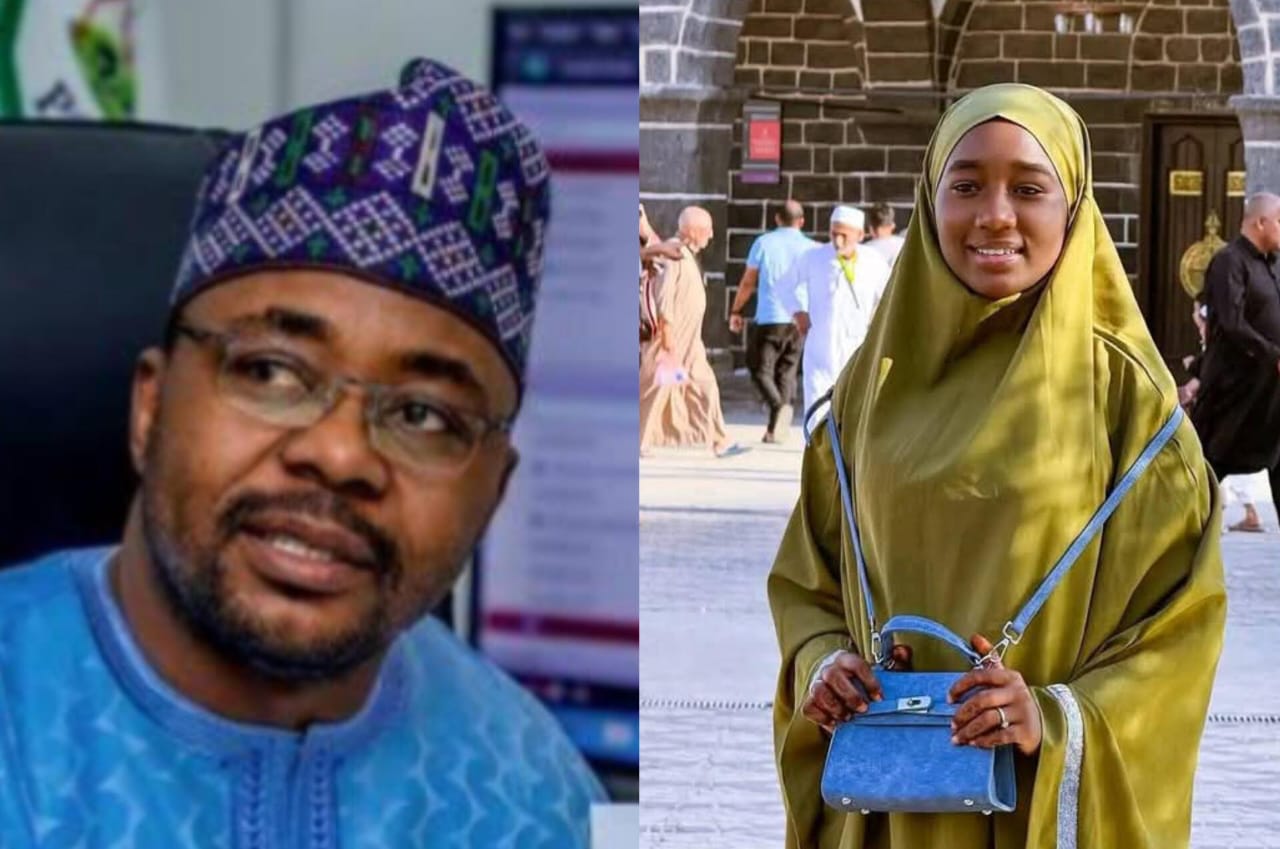
In a week already saturated with political trivialities, Rahama Saidu managed to hijack the public discourse; not with intellect or policy, but with a signboard and a smartphone.
What began as a routine demolition of illegal structures by the Kano Urban Planning and Development Authority (KNUPDA) descended into a farcical public relations disaster.
A young TikToker, flanked by a crowd, a camera, and curious entitlement; chose confrontation over compliance. And tragically, she wasn’t alone.
Jaafar Jaafar , never one to sugarcoat absurdities, decried the lack of institutional discipline. “You obstruct a public agency, then demand ‘notice’ as if the law must first seek your permission?”
His frustration echoed the sentiments of many: in any serious polity, impunity is not up for negotiation.
Rabiu Biyora , ever the satirist, veiled his discontent in humor. Rather than join the chorus of outrage, he crafted comedy.
But beneath the laughter was palpable irritation, particularly at the sight of Rahama, legs crossed and posture relaxed, seated in an official government office like a wronged heroine in a third-rate drama.
Aliyu Dahiru Aliyu , clearly incensed, issued what might be called a call for urban vengeance. “Had I been governor,” he thundered, “not a single signboard would remain.”
He romanticized El-Rufai’s radical urban policies, viewing them not as extreme, but as necessary correctives in a state allergic to order.
Dr. Muhsin Ibrahim , whose tone is typically tempered, spoke with an air of grave disappointment. “We watched this government unravel over signage,” he wrote.
“Where was this energy when entire plazas, roundabouts; even homes, were demolished without a whisper?” His critique wasn’t of Rahama alone, but of a government that allowed its dignity to be punctured by digital sensationalism.
And then came Dr. Aliyu Isa Aliyu , perhaps the most restrained but no less incisive. He painstakingly traced the chronology: the notice served, the violation committed, and the unexpected descent into administrative appeasement.
His argument was less emotional, more existential: when personal relationships compromise official duties, we’re no longer dealing with governance, we’re managing theatre.
The tragedy here isn’t just the TikToker. It’s the system that entertained her.
A single act of enforcement, meant to uphold urban order, has now exposed cracks in Kano’s political maturity. It isn’t just about a signboard. It’s about what happens when state institutions lose the courage to be impersonal. When the state kneels before clout, it forfeits its authority.
Kano deserves more than government officials arguing like influencers and managing optics like PR interns.
Perhaps the next notice served shouldn’t be to a signboard, but to the soul of governance itself.
Because when institutions bow to influence, and law is edited by likes and followers, what remains is not governance, but political sugar daddy syndrome.
Abubakar Mustapha Kiru, Write From Kano State.
