In the long and complicated history of Nigerian federalism, the relationship between the federal centre and the states has rarely been described as synergistic. It has been described as extractive, as patronising, as politically transactional, and as structurally unequal.
States have too often found themselves on the receiving end of a development architecture that took their resources, ignored their priorities, and returned a fraction of their value in the form of federal allocations that barely covered recurrent expenditure.
The idea that a state and the federal government could operate as genuine partners, each bringing its own strengths to a shared developmental vision, each amplifying the capacity of the other, has remained, for most of Nigeria’s post-independence history, more aspiration than reality.
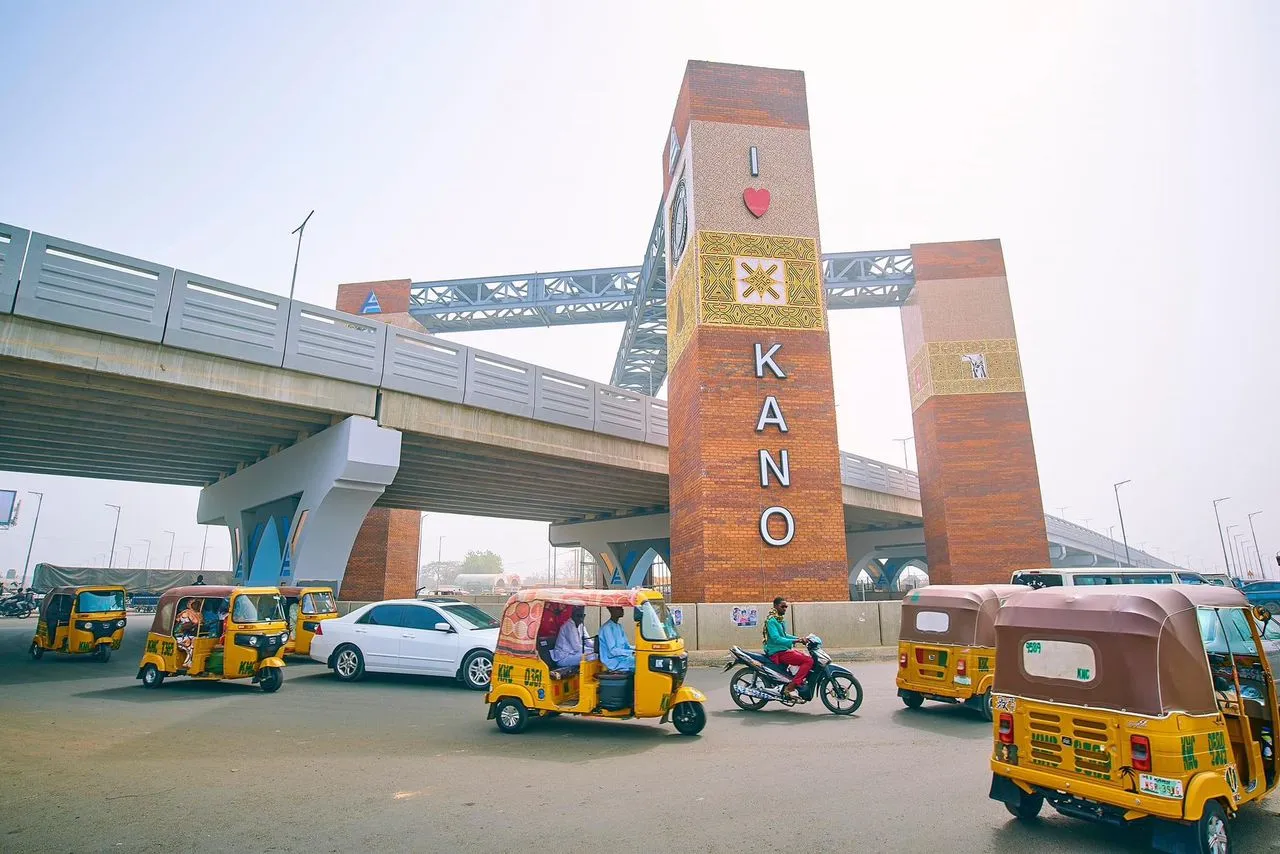
What is happening in Kano in April 2026 is different. And it deserves to be understood as such. Nigeria’s innovation crisis is not a crisis of ideas. It is a crisis of translation.
Walk through the corridors of Bayero University Kano, Kano University of Science and Technology Wudil, or Northwest University Kano, and you will find researchers who have spent years, sometimes decades, developing technologies, agricultural innovations, and industrial processes with genuine commercial potential.
Ask them how many of those innovations have reached the market, created jobs, or generated revenue for their inventors, and the answer, almost universally, is the same: very few.
The Federal Ministry of Innovation, Science and Technology estimates that a substantial proportion of Nigeria’s research and development outputs remain permanently within academic environments, never translated into commercially viable products, industries, or exportable enterprises. This is not a uniquely Nigerian problem.
But in a country of 220 million people, with the largest economy in Africa, the largest population of young people on the continent, and a natural resource base of extraordinary diversity and depth, the cost of that translation failure is measured not just in lost economic opportunity but in lost human potential, in the graduate who cannot find work, in the innovator who cannot find capital, and in the entrepreneur who cannot find markets.
The Energise Commercialisation Now initiative, designed and led by the Federal Ministry of Innovation, Science and Technology under the Honourable Minister Dr. Kingsley Tochukwu Udeh, SAN, and championed personally by Her Excellency Senator Oluremi Tinubu, CON, First Lady of the Federal Republic of Nigeria, is the Federal Government’s most direct and structured answer to that translation failure. And on April 23, 2026, Kano became the national stage on which that answer was first delivered.
What distinguishes ECoN from the long line of federal innovation initiatives that have preceded it is the specificity and coherence of its implementation architecture. This is not a programme that announces ambitious goals and leaves the machinery of delivery undefined.
It is a programme with a structured Innovation Commercialisation Pipeline, a National Innovation Asset Register, a sub-national resource mapping framework, dedicated IP advisory sessions, standards and quality clinics, deal rooms, industry matchmaking sessions, and a direct pipeline to international trade platforms including the Intra-African Trade Fair scheduled for 2027.
Each of these components addresses a specific and well-documented failure point in Nigeria’s innovation ecosystem.
The sub-national resource mapping framework addresses the chronic disconnect between local assets and national industrial strategy, a disconnect that has allowed Nigeria’s 774 local government areas to sit on enormous concentrations of agricultural wealth, mineral endowments, skilled human capital, and indigenous technology without any systematic mechanism for connecting those assets to the investors, manufacturers, and market intermediaries that could convert them into productive enterprises.
The National Innovation Asset Register addresses the invisibility problem, the fact that Nigeria’s innovators have historically operated without the legal, institutional, and commercial visibility required to attract serious investment.
An innovation that has not been documented, evaluated, and registered within a credible national framework is an innovation that exists, for all practical purposes, outside the economy. The register changes that. The IP advisory sessions address the protection problem.
For Kano’s craftsmen, whose leather goods, textile patterns, and agricultural processing techniques represent intellectual property of genuine commercial value, the absence of structured IP protection has meant that their innovations have been replicated and commercialised by others, often in other countries, without any benefit flowing back to the original creators.
The ECoN framework, by integrating IP advisory directly into its programme structure, treats intellectual property not as a legal technicality but as an economic asset that the state has a responsibility to protect.
The choice of Kano as the national launch venue for ECoN is not an act of federal charity. It is an act of strategic intelligence.
Kano brings to this partnership an economic inheritance and a current governance momentum that few Nigerian states can match.
Historically, Kano’s Kurmi Market, one of the oldest trading centres in West Africa, served as the terminal point of trans-Saharan trade routes connecting sub-Saharan Africa to North Africa, the Middle East, and Europe.
Its leather industry, anchored on the Kofar Mata dye pits that have operated continuously for over 500 years, represents a living tradition of artisanal innovation that predates the Nigerian state by centuries.
Its textile sector, its groundnut processing industry, and its dense network of small and medium enterprises across 44 local government areas represent a commercial culture of extraordinary depth and resilience.
In the present, Governor Abba Kabir Yusuf’s administration has invested with remarkable consistency in building the enabling environment that innovation-driven industrialisation requires.
The state’s 2026 budget of N1.477 trillion, the largest in Kano’s history, allocates N405.3 billion to education, N346.2 billion to infrastructure, and N212.2 billion to health.
Kano ranked first in Nigeria’s 2025 NECO results, a historic educational achievement underpinned by the recruitment of 400 Mathematics teachers, mass classroom renovations, free basic education, and the establishment of Kano State Polytechnic in Gaya.
Over N334 million has been disbursed to 6,680 women entrepreneurs across all 44 local government areas, and more than N800 million has been invested in youth empowerment programmes benefiting over 5,300 young people.
These are not background statistics. They are the active ingredients of a state that is ready to receive, deploy, and maximise a federal innovation programme of ECoN’s ambition and scope.
It would be intellectually incomplete to discuss the Abuja-Kano synergy without examining the political decision that created it. Governor Yusuf’s alignment with the Federal Government under President Bola Ahmed Tinubu was not universally welcomed.
In a political environment as emotionally charged as Kano’s, where loyalty to the Kwankwasiyya movement had defined political identity for over a decade, the decision to break ranks and chart an independent developmental course attracted fierce criticism and deeply personal accusations of betrayal.
The governor has been consistent and unapologetic in his response.
His decision, he has maintained, was not driven by personal ambition or political survival. It was driven by a simple and non-negotiable conviction: that Kano’s 20 million people cannot afford the luxury of principled opposition when principled partnership offers them hospitals, schools, jobs, and industrial investment that opposition cannot deliver.
The ECoN national launch in Kano, coming within months of that alignment, validates that conviction in the most visible and public way possible.
A state that was, until recently, watching federal programmes pass it by is now hosting the national inauguration of the Federal Government’s most ambitious innovation initiative, with the First Lady of Nigeria personally in attendance. That is not a coincidence.
That is the developmental logic of political alignment producing exactly the outcomes that Governor Yusuf promised his people it would produce.
The ultimate measure of the Abuja-Kano synergy is not the quality of the speeches delivered on April 23, or the size of the crowd at the event, or the number of dignitaries on the high table. It is what happens in Kano’s markets, workshops, factories, and farms in the months and years that follow.
It is whether the leather craftsman in Yan Kaba, whose family has practiced its trade for four generations, can access the IP protection, the quality certification, and the international market connections that will allow him to sell directly to buyers in Milan and Dubai rather than through intermediaries who capture the majority of the value.
It is whether the agricultural processor in Gezawa, who has developed an innovative technique for extending the shelf life of groundnut products, can access the standards clinic, the financing, and the industry matchmaking that will allow her to scale from a local operation into an export-ready enterprise.
It is whether the engineering graduate from Bayero University, who has spent three years developing a solar-powered water purification system in his family’s backyard, can stand in a deal room on April 24 and walk out with an investment commitment that turns his prototype into a product.
These are the outcomes that the Abuja-Kano synergy must ultimately deliver. They are the outcomes that Governor Yusuf’s Kano First Agenda is designed to support.
And they are the outcomes that the Energise Commercialisation Now initiative, if implemented with the discipline, transparency, and follow-through that the moment demands, is structurally equipped to produce.
Kano has been many things in its long and storied history. A commercial crossroads. A centre of Islamic scholarship.
A manufacturing hub. A political battleground. A city that has known greatness and felt its erosion with a particular kind of pain that only great cities can feel.
On April 23, 2026, Kano begins a new chapter. Not with the fanfare of a political rally, not with the hollow promises of a campaign season, but with the structured, federal-backed, internationally engaged, and data-driven architecture of an innovation commercialisation programme that treats Kano’s people not as voters to be courted but as producers, inventors, entrepreneurs, and economic actors to be empowered.
The Abuja-Kano synergy is real. Its foundations are solid. Its timing is right.
And its potential, for the people of Kano and for the broader project of Nigerian economic transformation, is nothing short of historic. Kano is ready. The partnership is in place.
And the work, the real, lasting, generational work of converting innovation into industry and potential into prosperity, begins now.
By Mohammed Babagana Abubakar Kano State Coordinator, The Unifier Project.