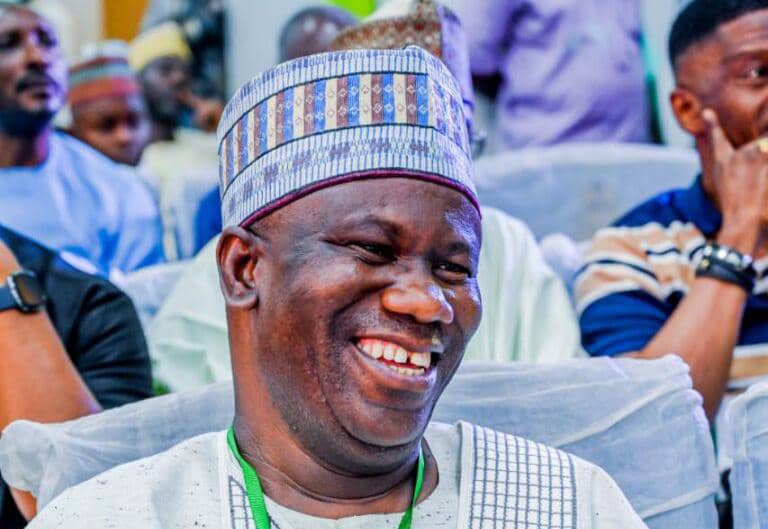
By Muazu A. Ishaq
Introduction: when Reassessment resembles selective amnesia
The recent article by Mallam Abba Anwar, titled “Reassessment of DSP Barau’s Projects in Kano North: One Building, Three Names,” purports to be a sober audit of constituency projects facilitated by the Deputy President of the Senate, Senator Barau I. Jibrin, CFR. On its face, it presents itself as the work of a concerned analyst holding power to account.
But a closer and much deeper analysis—and a critical glance at the calendar—reveals something far less noble.
Mallam Anwar’s piece is not an audit. It is an ambush. And the timing, the selective memory, and the glaring factual omissions all point to a single conclusion: this is a politically sponsored hit job, dressed up in the language of development journalism.
The Credibility Problem: A Pen for Hire?
Mallam Abba Anwar was among the journalist and public analyst I admired and highly respected and until very recently, he was among Senator Barau’s most enthusiastic public admirers who consistently praised the developmental and legislative expertise of Senator Barau Jibrin.
For instance, very recently in a July 2025 article published in Daily Trust, he praised the DSP for “surviving numerous political challenges and going on to achieve remarkable feats beyond those of many of his contemporaries.” In November 2025, he authored another piece extolling the Senator’s “interventions across the spectrum,” citing scholarship programmes, constituency projects, and empowerment initiatives with the kind of detail that suggested genuine conviction.
What changed between yesterday’s praise singing and today’s reassessment?
Somebody looking at the happening from a far will say: nothing. Mallam Anwar has simply “opened his eyes.” But for somebody with a more deeper and critical understanding of the circumstances would have more plausible explanation which is far less flattering. On October 18, 2026—just eight days before his so called reassessment—Mallam Anwar published a rejoinder defending a “deep-pocketed member of the House of Representatives from Kano on the money question saga” while taking thinly veiled shots at unnamed legislators whose projects remained incomplete.
Read also:
Fateful Triangle : Kano APC’s Stronghold, Kano North By Abba Anwar
The pattern is unmistakable: a writer who once praised Barau without reservation has now repositioned himself in service of a opposing political camp, and the “reassessment” of Barau’s projects is the opening salvo.
The question people should be asking is not whether Anwar’s criticisms have merit—some of them, as we shall see, are based on fundamental misunderstandings of how government works. The question is: who is behind this sudden conversion?
The Road: A Contractor’s Failure, Not a Senator’s
Mallam Anwar’s most dramatic claim concerns the Kano–Gwarzo–Dayi Road, where he alleges that N56 billion in fresh allocations has been “disappeared” into a project still at 35–40% completion.
What Anwar conveniently omits is that Senator Barau himself has been the most vocal critic of the contractor’s slow pace.
In June 2026, the Deputy President of the Senate wrote a formal letter to the Minister of Works, Senator Dave Umahi, calling for an immediate assessment of CGC Nigeria Limited’s performance and recommending revocation of the contract if the contractor was found unable to meet obligations.
The letter was leaked and reported by Daily Post and Arise News. Barau noted that despite N19 billion in the 2025 Appropriation Act and N37 billion in the 2026 budget, “significant milestones have reportedly not been achieved”.
This is not the behavior of a Senator who “does not supervise.” It is the behavior of a Senator who has exhausted legislative avenues and is now publicly pressuring the executive arm to act.
This makes one to doubt if the Mallam Anwar we know is still the experience journalist we all known him to be. Does be suddenly forget the nature of contract execution in Nigeria? How could a road awarded awarded at pre-inflation rate be completed at that same rate years later?
Prices of equipment and materials have tripled and Bureaucratic processes for variation take months. That a senator could facilitate additional allocation and force contractor back to site is what should be celebrated not condemned.
Anwar’s framing—”if you attracted N56 billion, who supervises the contractor?”—is either ignorant of the separation of powers or deliberately deceptive. A legislator appropriates funds and conducts oversight.
The contract is awarded and supervised by the Federal Ministry of Works. When a contractor underperforms, the legislator’s tools are letters, motions, and public pressure—all of which Barau has deployed. Anwar’s implication that the DSP should personally supervise CGC’s bulldozers is absurd.
Federal University of Science and Technology, Kabo: From Bill to Campus
Mallam Anwar shockingly dismisses Federal University of Science and Technology Kabo as “the only success that is not yet a success,” claiming it is merely a “Polytechnic being hurriedly painted to become a University”.
This is a profound misunderstanding of how universities are established in Nigeria.
The process begins with a legislative bill—which Senator Barau sponsored. It proceeds to presidential assent. Then comes the National Universities Commission’s resource verification. Only after NUC approval can the university admit students. Federal University Kabo has completed all these steps.
Current data from it’s website confirms that programmes have received NUC resource verification and that admissions for the 2026/2027 session are currently being issued to students on JAMB CAPS, across various disciplines including Computer Science, Software Engineering, Cyber Security, Nursing, Medical Laboratory Science, and Medicine and Surgery.
Professional programmes are subject to additional accreditation by bodies including the Medical and Dental Council of Nigeria, the Nursing and Midwifery Council, and COREN.
A university does not spring into existence fully formed with Senate buildings and professorial offices overnight. It evolves. What Senator Barau achieved was the legislative and regulatory foundation—the hardest part. Anwar’s complaint that Kabo lacks a teaching hospital is like complaining that a newborn cannot yet run a marathon.
The “One Building, Three Names” Canard
Anwar’s most sensational claim—that a single building is being passed off as three separate institutions—reveals either a shocking ignorance of contemporary global trend in Open and Distance Learning (ODL) or a deliberate willingness to mislead readers.
The National Open University of Nigeria operates through study centres that are fundamentally ICT-dependent. NOUN’s entire pedagogical model relies on digital infrastructure, computer access, and internet connectivity for students who study remotely. An ICT/E-Learning Centre and a NOUN Study Centre occupying the same facility is not a scandal—it is Ultimum utilization of resources and synergy which is done across the globe.
It is expected that Malam Anwar should fully understand that Open University education requires ICT facilities to function, unless he is deliberately manufacturing a scandal where none exists.
The Training Schools: Institutions Take Time
On the Immigration Training School in Bichi and NSCDC Training College in Gwarzo, Mallam Anwar complains that “no single officer has been trained there” two years after facilitation.
The official announcement of the Immigration school was made in January 2024, when the Comptroller-General of the NIS visited Senator Barau to request his facilitation. Barau’s commitment was to facilitate the establishment “from A to Z”—construction, equipping, and operationalization.
Security training institutions require not just buildings but curriculum development, instructor recruitment, administrative frameworks, and inter-agency coordination. The fact that both schools are today at 60-70% and 50-60% compilation level is not is not evidence of failure; it is evidence of progress on complex projects that should be celebrated and supported not to be subjected to cheap politicking.
Someone should remind my learned senior brother Mallam Anwar that establishing a critical national security institution is not like building a constituency borehole.
Anwar’s demand that two years is too long for a security training institution to go from legislative facilitation to full operation is detached from reality. The Nigerian Immigration Service itself, through its Comptroller-General, praised Barau for the initiative precisely because training infrastructure is so desperately needed.
The Real Question: Why Now?
Mallam Anwar has every right to critique Senator Barau’s projects. A free press demands nothing less.
But the major question deserving an answer is….why is it only today, after years of praising senator Barau Jibrin that Mallam Anwar suddenly opened his eyes to see that the road is uncompleted, the security training institutions have not graduated any officer or that NOUN study center is being used as ICT and FUDMA study centers?
Where was his critical eyes when he was writing his praises? Was it blinded then? Or has it newly been purchased now?
Until these questions were adequately answered, the so-called reassessment would instead be a testament to the very desperation that has defined the attempts to derail Barau’s political trajectory. When the ballot box cannot defeat a politician, and when legislative achievement cannot be matched, the last resort is the poisoned pen.
The pattern is clear. Anwar praised Barau for years. He published detailed encomiums in national newspapers. Then, very recently in the heat of political tension, he published a rejoinder that signaled a new alignment with a another political camp known for it’s ‘generous Money question’. Eight days later, he published a comprehensive attack a so-called reassessment of Barau’s entire development record. The records he spent years praising.
This is not journalism. This resembles a hired pen seeking a new employer.
Conclusively, the people of Kano North are wised up, they know the difference between allocation and delivery. They know that Senator Barau Jibrin CFR is the only senator in the history of Kano state who has consistently delivers as he has moved his constituents from allocation to tangible assets. The people also know that allocations are easier to made headlines but completed project took time to manifest but yet made historical legacies and that Senator Barau Jibrin is building that historical legacies that no matter how much ink is spent trying to erase it.
Muazu A. Ishaq
muazuabdullahi29@gmail.com
+2348038981655