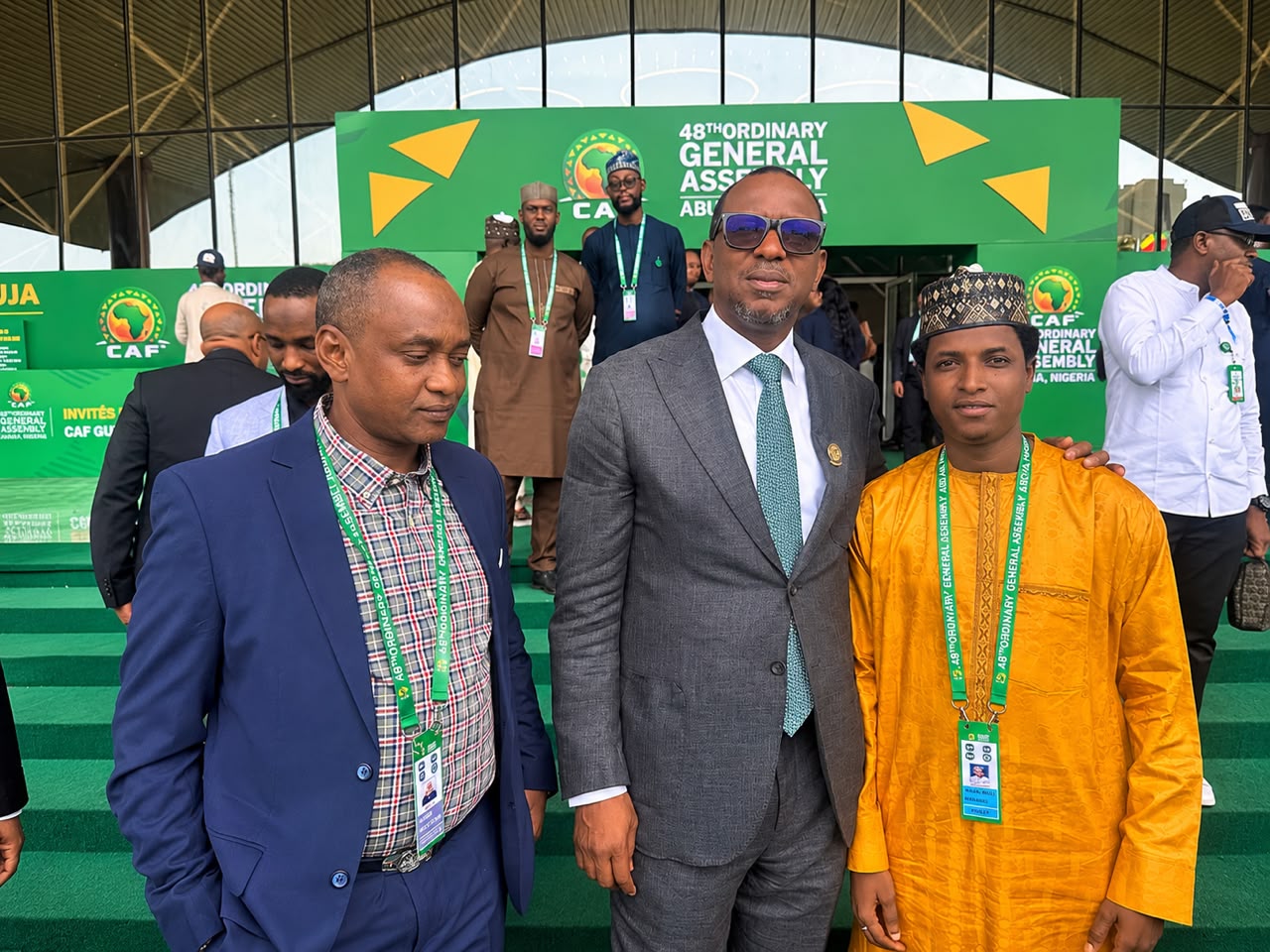
Nigeria’s hosting of the 48th Ordinary General Assembly of the Confederation of African Football (CAF), after 17 years, represents an important moment for the country’s sporting history and its renewed engagement with continental football administration.
The Independent Mirror reports that Beyond the significance of hosting such a major gathering, the development has brought renewed attention to the leadership of the National Sports Commission (NSC), particularly its Chairman, Shehu Dikko, and the support he receives from President Bola Ahmed Tinubu.
The event provides an opportunity to examine the role of institutional leadership, presidential backing and strategic planning in positioning Nigeria to pursue a stronger presence in African and international sports.
One of the defining factors behind the development is the working relationship between Shehu Dikko and President Bole Ahmed Tinubu.
Dikko’s ability to secure presidential backing for major sporting initiatives has been central to the government’s approach to sports administration.
This illustrates the importance of political will and institutional support in delivering projects that require coordination, resources and international cooperation.
For Dikko, the hosting of the CAF General Assembly is more than an international event. It is an opportunity to demonstrate the direction of Nigeria’s sports administration and strengthen the country’s relationship with the continental football governing body.
Since his appointment, Dikko has pursued an approach that places emphasis on sports development, partnerships, investment and the economic opportunities within the sports sector.
His administration’s efforts have brought renewed attention to Nigeria’s potential as a destination for major international sporting events.
Read also:
CAF Awards: Dikko Reaffirms FG’s Commitment to Successful Hosting of Events
The CAF General Assembly itself brought together representatives of all 54 CAF member associations, alongside leading figures in African and world football, including FIFA President Gianni Infantino.
CAF President Patrice Motsepe publicly acknowledged President Tinubu, the Nigerian Government, the NFF and the Nigerian people for their hospitality and support.
Nigeria is also scheduled to host the 2026 CAF Awards in Lagos on December 2, making the country the first to host both events in the same year.
Dikko’s role in this development deserves serious attention and recognition. While the successful hosting of an international sporting event is a collective responsibility involving several institutions and stakeholders, the importance of leadership, coordination and the ability to secure government commitment cannot be overlooked.
The bigger question, however, is what Nigeria intends to build from this opportunity.
Hosting the CAF General Assembly should not be treated as an isolated achievement or merely an occasion for international recognition. It should become part of a broader strategy to attract more international sporting events, strengthen sporting infrastructure, improve sports administration, develop young talents and create opportunities for Nigerian athletes.
This is where the foundation being pursued under the present NSC leadership will be particularly important.
Nigeria has enormous sporting potential, but translating that potential into sustainable success requires consistency, institutional reforms, adequate investment and continuity in policy implementation.
Dikko’s vision and the support he receives from President Tinubu will therefore be judged not only by the events Nigeria hosts today but also by the lasting institutions, opportunities and sporting achievements that emerge in the years ahead.
For now, Nigeria’s return to hosting the CAF Ordinary General Assembly after 17 years represents a significant milestone.
It also offers an opportunity to recognise the contributions of Shehu Dikko and the Federal Government while looking forward to what their ongoing sports development agenda can deliver.
The real legacy of this moment will be measured by how successfully Nigeria converts today’s international recognition into tomorrow’s sporting achievements.
Suhaib Auwal is a Journalist and Public Affairs Analyst, wrote from Abuja.